Buy windpointpark.com ?
We are moving the project
windpointpark.com .
Are you interested in purchasing the domain
windpointpark.com ?
domain@kv-gmbh.de · 0541-91531010
Buy windpointpark.com ?
What is the difference between pickled dill and dill?
Pickled dill refers to dill that has been preserved in a brine or vinegar solution, giving it a tangy and slightly sour flavor. On the other hand, dill refers to the fresh herb itself, which has a delicate, feathery texture and a mild, slightly sweet flavor. Pickled dill is often used as a condiment or flavoring in dishes, while fresh dill is used as an herb to add flavor to a wide variety of dishes, including salads, soups, and seafood. **
Is that really dill?
To determine if something is really dill, you can check for certain characteristics such as the appearance, smell, and taste. Dill typically has feathery green leaves with a strong, distinct aroma that is slightly sweet and tangy. You can also taste a small piece to confirm if it has the expected flavor profile of dill, which is fresh, herbaceous, and slightly bitter. If the plant or herb in question matches these characteristics, then it is likely dill. **

Similar search terms for Terpenic-Lab-Organic-Dill
Top-Angebote
Products related to Terpenic-Lab-Organic-Dill:
-
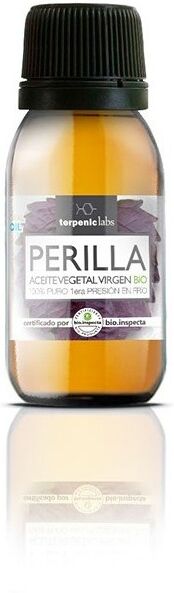
Terpenic Lab Organic Perilla Vegetable Oil 250 mlHealth and Beauty First aid kit Terpenic Lab Organic Perilla Vegetable Oil 250 ml Scent: Characteristic pleasant herbal scent. Texture: Medium penetration liquid for massage. In addition, its unsaponifiable fraction also contains vitamin E and polyphenolic compounds. These fat-soluble vitamins and other chemical substances provide the following properties: restructuring, soothing, softening, and anti-inflammatory. Uses and applications: In cosmetic use: it is recommended for atopic skin, dermatitis, spring allergies, eczema, various skin problems, sinusitis, rhinitis, vitiligo, as an immunomodulator, for respiratory conditions, and as an anti-aging treatment. It is also believed to have mood-enhancing and concentration-boosting properties. Highly recommended in aromatherapy synergies with essential oils. Topical use: Apply with a gentle massage to the area to be treated. Oral use: Highly recommended for oral use as a substitute for flaxseed oil and fish oil. Although suitable for consumption, it is recommended to use it raw; we do not recommend heating it above 316C as this will cause it to lose its beneficial properties.28,25 £*Shipping: 3,99 £Secure redirect to the provider
-
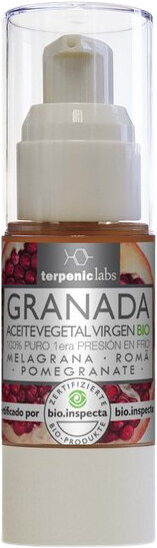
Terpenic Lab Organic Pomegranate Vegetable Oil 30 mlHealth and Beauty Creams Terpenic Lab Organic Pomegranate Vegetable Oil 30 ml Pomegranate oil is obtained from the seeds of the Punica Granatum tree through an extremely gentle process. This tree reaches a maximum height of 5 meters and is often cultivated as a shrub. The fruit is a pomegranate, measuring about 12 cm and covered with a thick, reddish-brown rind. The ripe seeds inside the rind are bright red. The pomegranate tree requires a warm, dry climate and grows mainly in Mediterranean countries. Golden Sticky Pomegranate Oil is an extraordinary vegetable oil with a characteristic odor. Pomegranate oil contains a high percentage of conjugated unsaturated fatty acids and fatty substances that are accompanied by antioxidant properties such as vitamin E. This oil is extremely valuable due to its richness in punicic acid. This conjugated fatty acid is difficult to find in other oils and that is precisely why it is named after the species where it is most abundant, the pomegranate (Punica Granatum). The following properties stand out: Cellular regenerator, Anti-inflammatory, Emollient, Soothing and Anti-radical. The oil has the ability to reduce wrinkles, improve skin firmness, and regenerate skin. These properties make it the ideal facial oil for dry, mature, and stressed skin.15,20 £*Shipping: 3,99 £Secure redirect to the provider
-
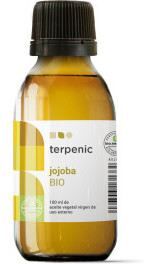
Terpenic Lab Organic Jojoba Vegetable Oil 100 mlHealth and Beauty Creams Terpenic Lab Organic Jojoba Vegetable Oil 100 ml 100% pure Jojoba Vegetable Oil. Ideal for oily and acne-prone skin, it regulates sebum production and is highly nourishing. Directions for Use: Topical use. Apply to the affected area with a gentle massage.12,35 £*Shipping: 3,99 £Secure redirect to the provider
-
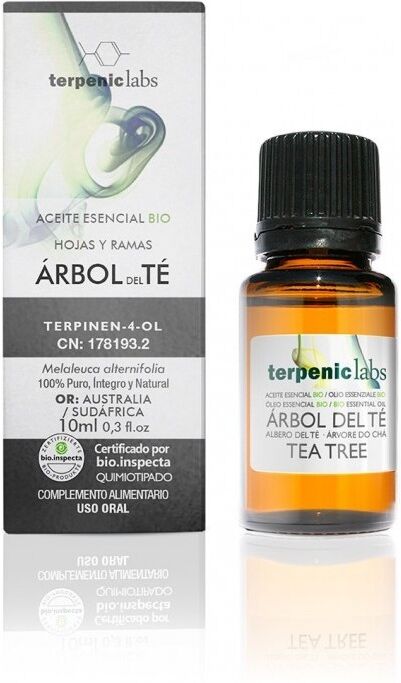
Terpenic Lab Organic Tea Tree 50 ml 50 mlNutrition and Supplements Natural Extracts Terpenic Lab Organic Tea Tree 50 ml 50 ml Properties:Antibacterial Antibiotic AntifungalImmunostimulant AntioxidantThe Tea Tree belongs to the Myrtaceae family. It is a small tree with needle-like leaves and yellow, white or purple flowers. Our knowledge of the properties and uses of the tea tree comes from the extensive tradition collected over thousands of years; it was already used by Australian Aborigines. During the Second World War it was used as a first aid essential oil, effective for a large number of infections, as well as for treating wounds and skin problems. The essential oil is obtained by steam distillation of the leaves. - Indications: Bronchitis, Cough, Flu, Sinusitis, Otitis, Candidiasis, Intestinal parasites, Gingivitis, Athlete's foot - Aromatic Family: Balsamic. - Combines with: Lavender, Clove, Rosemary Cineole, Geranium, Nutmeg. - Precautions: Do not use during the first 3 months of pregnancy.21,75 £*Shipping: 3,99 £Secure redirect to the provider
-
What do you need to consider and do in the basic organic chemistry lab course?
In a basic organic chemistry lab course, students need to consider safety precautions, such as wearing appropriate personal protective equipment and following proper handling and disposal procedures for chemicals. They also need to familiarize themselves with the equipment and techniques used in organic chemistry experiments, such as distillation, extraction, and chromatography. Additionally, students should pay close attention to the instructions and procedures provided in the lab manual, as well as accurately record their observations and data in their lab notebooks. Finally, they should be mindful of the environmental impact of the chemicals and waste generated in the lab and follow sustainable practices. **
-
How long do dill plants live?
Dill plants are annuals, meaning they complete their life cycle in one year. They typically grow, flower, produce seeds, and then die within a single growing season. However, dill plants can self-seed easily, so new plants may sprout the following year if conditions are favorable. Overall, the lifespan of a dill plant is usually around one year. **
-
What is a substitute for dill?
A good substitute for dill is fennel fronds, which have a similar flavor profile with a hint of licorice. Another option is tarragon, which has a slightly stronger flavor but can still provide a similar herbal note to dishes. Additionally, parsley can be used as a substitute for dill, although it has a milder flavor. These alternatives can be used in recipes that call for dill to provide a similar taste and aroma. **
-
How can dill flowers be used for guinea pigs?
Dill flowers can be used for guinea pigs as a tasty and nutritious treat. Guinea pigs can enjoy nibbling on the small, delicate flowers as a source of enrichment and variety in their diet. Dill flowers are also high in vitamin C, which is essential for guinea pigs to prevent scurvy. However, it's important to offer dill flowers in moderation, as too much can upset their digestive system. **
Why does dill parsley have no smell after harvesting?
Dill parsley may have no smell after harvesting because its essential oils, which are responsible for its aroma, begin to degrade once the plant is cut. Essential oils are volatile compounds that are released into the air, giving herbs their characteristic scent. However, once the plant is harvested, these oils start to break down, leading to a loss of fragrance. Additionally, factors such as improper storage or prolonged exposure to air can also contribute to the loss of smell in dill parsley after harvesting. **
Why is organic chemistry called organic chemistry?
Organic chemistry is called so because it was originally believed that compounds found in living organisms could only be produced by living organisms, and were therefore called "organic" compounds. This belief was later disproven, but the name stuck. Organic chemistry is the study of carbon-containing compounds, which are abundant in living organisms, and it focuses on the structure, properties, and reactions of these compounds. **
Top-Angebote
Products related to Terpenic-Lab-Organic-Dill:
-
Terpenic Lab Organic Dill Essential Oil 10 ml 10 mlNutrition and Supplements Natural Extracts Terpenic Lab Organic Dill Essential Oil 10 ml 10 ml Properties: Mucolytic, Decongestant, Eupeptic, Cholagogue. It is an annual herbaceous plant belonging to the Apiaceae family, native to the eastern Mediterranean region. It is aromatic and measures 30 to 45 cm. The stem is green, with abundant white pith, and branches at the tip, where it bears a large number of umbels with bright yellow flowers that appear in midsummer. The leaves are very thin, feather-like, and have a flavor reminiscent of parsley. The fruits are brown, and the seeds are flat, oval, and have a somewhat bitter taste. The essential oil is obtained by steam distillation of the seeds. Indications: Hepatobiliary insufficiency, Dyspepsia, Bronchitis - Aromatic Family: Spicy. - Combines with: Bergamot, Coriander, Rosemary Camphor, Tangerine. Precautions: Do not use during pregnancy, in children under 6 years of age, in the elderly, or in cases of epilepsy. - Professionals only? Always use under professional supervision.7,78 £*Shipping: 3,99 £Secure redirect to the provider
-
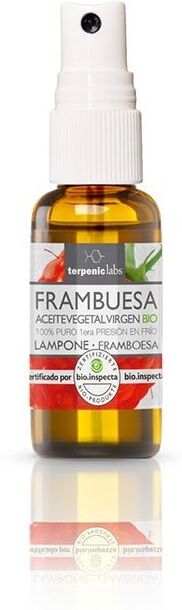
Terpenic Lab Organic Raspberry Oil 30mlHealth and Beauty Creams Terpenic Lab Organic Raspberry Oil 30ml Raspberry seed oil is obtained by cold pressing and subsequent filtration of the seeds of the Rubus ideus L. shrub. This shrub grows endemic to Europe and parts of Asia where it extends from 1.5m to 2.5m with evergreen leaves and whose sweet fruits (raspberries) are produced from late summer to early autumn, although its flowering and ripening may vary depending on the warmer or colder climate of the regions where it grows. Benefits: Acts as an anti-inflammatory for redness and irritation. Properties: moisturizing, nourishing, soothing, and regenerating. Soothing and anti-itch effect. Widely used in the formulation of regenerating cosmetics for the eye contour, lip contour, and facial, hair, and body treatments.11,95 £*Shipping: 3,99 £Secure redirect to the provider
-
Terpenic Lab Organic Perilla Vegetable Oil 250 mlHealth and Beauty First aid kit Terpenic Lab Organic Perilla Vegetable Oil 250 ml Scent: Characteristic pleasant herbal scent. Texture: Medium penetration liquid for massage. In addition, its unsaponifiable fraction also contains vitamin E and polyphenolic compounds. These fat-soluble vitamins and other chemical substances provide the following properties: restructuring, soothing, softening, and anti-inflammatory. Uses and applications: In cosmetic use: it is recommended for atopic skin, dermatitis, spring allergies, eczema, various skin problems, sinusitis, rhinitis, vitiligo, as an immunomodulator, for respiratory conditions, and as an anti-aging treatment. It is also believed to have mood-enhancing and concentration-boosting properties. Highly recommended in aromatherapy synergies with essential oils. Topical use: Apply with a gentle massage to the area to be treated. Oral use: Highly recommended for oral use as a substitute for flaxseed oil and fish oil. Although suitable for consumption, it is recommended to use it raw; we do not recommend heating it above 316C as this will cause it to lose its beneficial properties.28,25 £*Shipping: 3,99 £Secure redirect to the provider
-
Terpenic Lab Organic Pomegranate Vegetable Oil 30 mlHealth and Beauty Creams Terpenic Lab Organic Pomegranate Vegetable Oil 30 ml Pomegranate oil is obtained from the seeds of the Punica Granatum tree through an extremely gentle process. This tree reaches a maximum height of 5 meters and is often cultivated as a shrub. The fruit is a pomegranate, measuring about 12 cm and covered with a thick, reddish-brown rind. The ripe seeds inside the rind are bright red. The pomegranate tree requires a warm, dry climate and grows mainly in Mediterranean countries. Golden Sticky Pomegranate Oil is an extraordinary vegetable oil with a characteristic odor. Pomegranate oil contains a high percentage of conjugated unsaturated fatty acids and fatty substances that are accompanied by antioxidant properties such as vitamin E. This oil is extremely valuable due to its richness in punicic acid. This conjugated fatty acid is difficult to find in other oils and that is precisely why it is named after the species where it is most abundant, the pomegranate (Punica Granatum). The following properties stand out: Cellular regenerator, Anti-inflammatory, Emollient, Soothing and Anti-radical. The oil has the ability to reduce wrinkles, improve skin firmness, and regenerate skin. These properties make it the ideal facial oil for dry, mature, and stressed skin.15,20 £*Shipping: 3,99 £Secure redirect to the provider
-
What is the difference between pickled dill and dill?
Pickled dill refers to dill that has been preserved in a brine or vinegar solution, giving it a tangy and slightly sour flavor. On the other hand, dill refers to the fresh herb itself, which has a delicate, feathery texture and a mild, slightly sweet flavor. Pickled dill is often used as a condiment or flavoring in dishes, while fresh dill is used as an herb to add flavor to a wide variety of dishes, including salads, soups, and seafood. **
-
Is that really dill?
To determine if something is really dill, you can check for certain characteristics such as the appearance, smell, and taste. Dill typically has feathery green leaves with a strong, distinct aroma that is slightly sweet and tangy. You can also taste a small piece to confirm if it has the expected flavor profile of dill, which is fresh, herbaceous, and slightly bitter. If the plant or herb in question matches these characteristics, then it is likely dill. **
-
What do you need to consider and do in the basic organic chemistry lab course?
In a basic organic chemistry lab course, students need to consider safety precautions, such as wearing appropriate personal protective equipment and following proper handling and disposal procedures for chemicals. They also need to familiarize themselves with the equipment and techniques used in organic chemistry experiments, such as distillation, extraction, and chromatography. Additionally, students should pay close attention to the instructions and procedures provided in the lab manual, as well as accurately record their observations and data in their lab notebooks. Finally, they should be mindful of the environmental impact of the chemicals and waste generated in the lab and follow sustainable practices. **
-
How long do dill plants live?
Dill plants are annuals, meaning they complete their life cycle in one year. They typically grow, flower, produce seeds, and then die within a single growing season. However, dill plants can self-seed easily, so new plants may sprout the following year if conditions are favorable. Overall, the lifespan of a dill plant is usually around one year. **
Similar search terms for Terpenic-Lab-Organic-Dill
-
Terpenic Lab Organic Jojoba Vegetable Oil 100 mlHealth and Beauty Creams Terpenic Lab Organic Jojoba Vegetable Oil 100 ml 100% pure Jojoba Vegetable Oil. Ideal for oily and acne-prone skin, it regulates sebum production and is highly nourishing. Directions for Use: Topical use. Apply to the affected area with a gentle massage.12,35 £*Shipping: 3,99 £Secure redirect to the provider
-
Terpenic Lab Organic Tea Tree 50 ml 50 mlNutrition and Supplements Natural Extracts Terpenic Lab Organic Tea Tree 50 ml 50 ml Properties:Antibacterial Antibiotic AntifungalImmunostimulant AntioxidantThe Tea Tree belongs to the Myrtaceae family. It is a small tree with needle-like leaves and yellow, white or purple flowers. Our knowledge of the properties and uses of the tea tree comes from the extensive tradition collected over thousands of years; it was already used by Australian Aborigines. During the Second World War it was used as a first aid essential oil, effective for a large number of infections, as well as for treating wounds and skin problems. The essential oil is obtained by steam distillation of the leaves. - Indications: Bronchitis, Cough, Flu, Sinusitis, Otitis, Candidiasis, Intestinal parasites, Gingivitis, Athlete's foot - Aromatic Family: Balsamic. - Combines with: Lavender, Clove, Rosemary Cineole, Geranium, Nutmeg. - Precautions: Do not use during the first 3 months of pregnancy.21,75 £*Shipping: 3,99 £Secure redirect to the provider
-
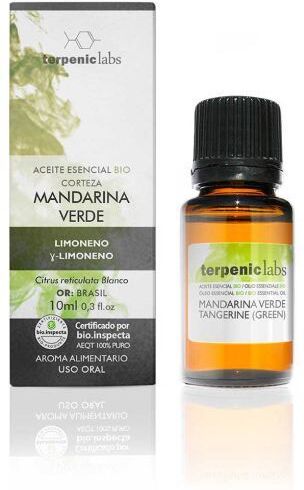
Terpenic Lab Organic Green Mandarin Essential Oil 10 mlNutrition and Supplements Natural Extracts Terpenic Lab Organic Green Mandarin Essential Oil 10 ml Historically, Green Mandarin Essential Oil has been valued for its properties as a digestive tonic, antinauseant, and antiseptic. Relaxing, sedative, calming of the sympathetic nervous system. Precautions for use: Use with caution in children due to the possible occurrence of allergic reactions due to hypersensitivity. May irritate sensitive skin. Do not apply before sun exposure.8,32 £*Shipping: 3,99 £Secure redirect to the provider
-
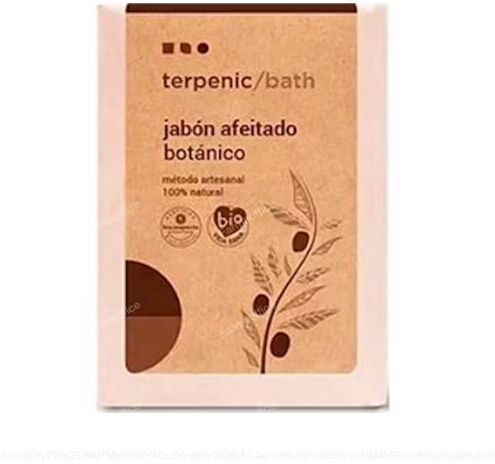
Terpenic Lab Bath Organic Solid Botanical Shaving Soap 100gHealth and Beauty Shaving Terpenic Lab Bath Organic Solid Botanical Shaving Soap 100g What is Terpenic Bath Organic Solid Botanical Shaving Soap 100 gr? Terpenic Bath Organic Solid Botanical Shaving Soap 100g is an innovative and eco-friendly shaving solution, designed for lovers of natural personal care. This solid soap combines organic ingredients and botanical extracts to provide a smooth and effective shaving experience, while reducing the environmental impact associated with conventional shaving products. Benefits: Natural composition: Formulated exclusively with organic and bio-certified ingredients. Protection and softness: Enriched with aloe vera and essential oils that protect and soften the skin, reducing irritation and redness. Environmentally friendly: Being a solid product, it reduces the use of plastics and is 100% biodegradable. Economical: Its solid format ensures a long life compared to traditional options. Who is it for? This shaving soap is ideal for those looking for sustainable and environmentally friendly alternatives in their grooming routine. It is especially suitable for people with sensitive skin who require gentle products that care for their skin. How do I apply it? Wet your face with warm water to open the pores. Rub the soap between your hands or directly on the area to be shaved until you obtain the desired lather. Apply the lather in gentle circular movements. Proceed to shave and then rinse with cold water to close the pores. For best results, use daily and follow with a natural after-shave balm. Buy Terpenic Bath Organic Solid Botanical Shaving Soap 100 gr Find Terpenic Bath Organic Solid Botanical Shaving Soap 100 gr in our online store. Buy now and enjoy a smooth shave that is respectful of your skin and the planet. Perfect for those who value high quality products with low environmental impact.4,54 £*Shipping: 3,99 £Secure redirect to the provider
-
What is a substitute for dill?
A good substitute for dill is fennel fronds, which have a similar flavor profile with a hint of licorice. Another option is tarragon, which has a slightly stronger flavor but can still provide a similar herbal note to dishes. Additionally, parsley can be used as a substitute for dill, although it has a milder flavor. These alternatives can be used in recipes that call for dill to provide a similar taste and aroma. **
-
How can dill flowers be used for guinea pigs?
Dill flowers can be used for guinea pigs as a tasty and nutritious treat. Guinea pigs can enjoy nibbling on the small, delicate flowers as a source of enrichment and variety in their diet. Dill flowers are also high in vitamin C, which is essential for guinea pigs to prevent scurvy. However, it's important to offer dill flowers in moderation, as too much can upset their digestive system. **
-
Why does dill parsley have no smell after harvesting?
Dill parsley may have no smell after harvesting because its essential oils, which are responsible for its aroma, begin to degrade once the plant is cut. Essential oils are volatile compounds that are released into the air, giving herbs their characteristic scent. However, once the plant is harvested, these oils start to break down, leading to a loss of fragrance. Additionally, factors such as improper storage or prolonged exposure to air can also contribute to the loss of smell in dill parsley after harvesting. **
-
Why is organic chemistry called organic chemistry?
Organic chemistry is called so because it was originally believed that compounds found in living organisms could only be produced by living organisms, and were therefore called "organic" compounds. This belief was later disproven, but the name stuck. Organic chemistry is the study of carbon-containing compounds, which are abundant in living organisms, and it focuses on the structure, properties, and reactions of these compounds. **
* All prices are inclusive of VAT and, if applicable, plus shipping costs. The offer information is based on the details provided by the respective shop and is updated through automated processes. Real-time updates do not occur, so deviations can occur in individual cases. ** Note: Parts of this content were created by AI.