Buy windpointpark.com ?
We are moving the project
windpointpark.com .
Are you interested in purchasing the domain
windpointpark.com ?
domain@kv-gmbh.de · 0541-91531010
Buy windpointpark.com ?
Are coin tosses generally disjoint and independent?
Coin tosses are generally considered to be independent events, meaning the outcome of one coin toss does not affect the outcome of another. Each coin toss has a 50% chance of landing on heads or tails, regardless of previous tosses. However, coin tosses are not disjoint events because they can both result in the same outcome (e.g. both heads or both tails). **
What is the probability of getting heads in 1000 coin tosses?
The probability of getting heads in a single coin toss is 0.5 or 50%. When tossing a coin 1000 times, the probability of getting heads each time remains 0.5. This is because each coin toss is an independent event, and the outcome of one toss does not affect the outcome of the next. Therefore, the probability of getting heads in 1000 coin tosses is also 0.5 or 50%. **


Similar search terms for Tosses
Top-Angebote
Products related to Tosses:
-
Multisell Products Hub Compact Monocular Telescope For Travel, Hiking, Fishing, Camping & Bird Watching 1pcDiscover the wonders of nature with the Monocular 1 pc Telescope, your perfect companion for outdoor adventures. Whether you're hiking, fishing, camping, or stargazing, this compact and portable telescope offers crystalclear views and is ideal for...29,97 $*Shipping: 0,00 $Secure redirect to the provider
-
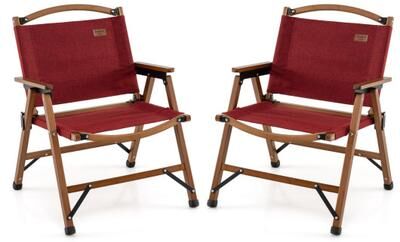
Costway Set of 2 Bamboo Dorm Chair with Storage Pocket for Camping and Fishing-BeigeWith a skin-friendly and breathable canvas fabric top, this chair will provide you with unlimited coziness, and the surface is also easy to clean with just a wet towel.82,99 $*Shipping: 0,00 $Secure redirect to the provider



-
How can a probability space be set up for the five coin tosses?
To set up a probability space for the five coin tosses, we need to define the sample space, event space, and probability measure. The sample space would consist of all possible outcomes of the five coin tosses, which would be {HHHHH, HHHHT, HHHTH, HHTHH, ... , TTTTT}. The event space would be a collection of subsets of the sample space representing different events, such as getting at least three heads. The probability measure would assign probabilities to each event based on the assumption that the coin is fair, meaning each outcome is equally likely. **
-
What is the probability of getting exactly two heads in three coin tosses?
The probability of getting exactly two heads in three coin tosses can be calculated using the binomial probability formula. The probability of getting a head in a single coin toss is 0.5, and the probability of getting a tail is also 0.5. Using the binomial probability formula, the probability of getting exactly two heads in three coin tosses is calculated as 3C2 * (0.5)^2 * (0.5)^1 = 3 * 0.25 * 0.5 = 0.375, or 37.5%. Therefore, the probability of getting exactly two heads in three coin tosses is 0.375 or 37.5%. **
-
What is the probability of getting at least 6 heads in 10 coin tosses?
The probability of getting at least 6 heads in 10 coin tosses can be calculated using the binomial probability formula. The probability of getting exactly 6 heads is 10C6 * (0.5)^6 * (0.5)^4, the probability of getting exactly 7 heads is 10C7 * (0.5)^7 * (0.5)^3, and so on. We can calculate the probabilities for getting 6, 7, 8, 9, and 10 heads and then add them together to find the probability of getting at least 6 heads in 10 coin tosses. This probability is approximately 0.8281, or 82.81%. **
-
How do you calculate the probability that in 8 coin tosses, heads and tails come alternately?
To calculate the probability that in 8 coin tosses, heads and tails come alternately, we can use the concept of permutations. There are 2 possible outcomes for each toss (heads or tails), so there are 2^8 = 256 total possible outcomes for 8 coin tosses. To calculate the probability of getting heads and tails alternately, we can count the number of favorable outcomes where heads and tails alternate and then divide by the total possible outcomes. By counting the favorable outcomes, we find that there are 128 favorable outcomes where heads and tails alternate. Therefore, the probability is 128/256 = 0.5 or 50%. **


What does the dog do with the stuffed animal when he tosses it around and growls?
When the dog tosses the stuffed animal around and growls, it is likely engaging in play behavior. Dogs often exhibit this behavior when they are trying to mimic hunting or prey behavior. Tossing the stuffed animal around and growling is a way for the dog to release energy and engage in a form of play. It is a natural behavior for dogs and can be a sign of their playful and energetic nature. **
Search for a fishing lake.
You can search for a fishing lake by using online resources such as fishing websites, state or local government websites, or fishing forums. These resources often provide information on the best fishing lakes in a specific area, including details on the types of fish available, fishing regulations, and amenities. You can also ask local anglers or visit a nearby bait and tackle shop for recommendations on the best fishing lakes in the area. Additionally, consider using mapping apps or GPS devices to locate fishing lakes near your current location. **
Top-Angebote
Products related to Tosses:
-
ModernMart Spovan Waterproof Fishing Barometer Watch For Hiking, Camping & Outdoor Sports Spovan Waterproof Fishing Barometer Watch For Hiking, Camping & Outdoor SportsNever miss the perfect fishing window again with this rugged fishing barometer watch designed for anglers and outdoor adventurers who rely on precision in changing conditions. Built with realtime pressure tracking, weather monitoring, and water...119,97 $*Shipping: 0,00 $Secure redirect to the provider
-
Multisell Products Hub Compact Monocular Telescope For Travel, Hiking, Fishing, Camping & Bird Watching 1pcDiscover the wonders of nature with the Monocular 1 pc Telescope, your perfect companion for outdoor adventures. Whether you're hiking, fishing, camping, or stargazing, this compact and portable telescope offers crystalclear views and is ideal for...29,97 $*Shipping: 0,00 $Secure redirect to the provider
-
Are coin tosses generally disjoint and independent?
Coin tosses are generally considered to be independent events, meaning the outcome of one coin toss does not affect the outcome of another. Each coin toss has a 50% chance of landing on heads or tails, regardless of previous tosses. However, coin tosses are not disjoint events because they can both result in the same outcome (e.g. both heads or both tails). **
-
What is the probability of getting heads in 1000 coin tosses?
The probability of getting heads in a single coin toss is 0.5 or 50%. When tossing a coin 1000 times, the probability of getting heads each time remains 0.5. This is because each coin toss is an independent event, and the outcome of one toss does not affect the outcome of the next. Therefore, the probability of getting heads in 1000 coin tosses is also 0.5 or 50%. **
-
How can a probability space be set up for the five coin tosses?
To set up a probability space for the five coin tosses, we need to define the sample space, event space, and probability measure. The sample space would consist of all possible outcomes of the five coin tosses, which would be {HHHHH, HHHHT, HHHTH, HHTHH, ... , TTTTT}. The event space would be a collection of subsets of the sample space representing different events, such as getting at least three heads. The probability measure would assign probabilities to each event based on the assumption that the coin is fair, meaning each outcome is equally likely. **
-
What is the probability of getting exactly two heads in three coin tosses?
The probability of getting exactly two heads in three coin tosses can be calculated using the binomial probability formula. The probability of getting a head in a single coin toss is 0.5, and the probability of getting a tail is also 0.5. Using the binomial probability formula, the probability of getting exactly two heads in three coin tosses is calculated as 3C2 * (0.5)^2 * (0.5)^1 = 3 * 0.25 * 0.5 = 0.375, or 37.5%. Therefore, the probability of getting exactly two heads in three coin tosses is 0.375 or 37.5%. **
Similar search terms for Tosses
-
Costway Set of 2 Bamboo Dorm Chair with Storage Pocket for Camping and Fishing-BeigeWith a skin-friendly and breathable canvas fabric top, this chair will provide you with unlimited coziness, and the surface is also easy to clean with just a wet towel.82,99 $*Shipping: 0,00 $Secure redirect to the provider
-
Combo Retail Shop Mini Multi functional Headlamp, USB Rechargeable LED Camping Light For Fishing, Walking Dogs, Running, Cycling, Exercise Mini Multi functional Headlamp, USB Rechargeable LED Camping Light For Fishing, Walking Dogs, Running, Cycling, ExerBrighten Your Outdoor Adventures with the Mini Multifunctional Headlamp Are you tired of fumbling around in the dark during your outdoor activities The Mini Multifunctional Headlamp is the perfect companion for any adventure. Whether you're camping,...39,97 $*Shipping: 0,00 $Secure redirect to the provider
-
What is the probability of getting at least 6 heads in 10 coin tosses?
The probability of getting at least 6 heads in 10 coin tosses can be calculated using the binomial probability formula. The probability of getting exactly 6 heads is 10C6 * (0.5)^6 * (0.5)^4, the probability of getting exactly 7 heads is 10C7 * (0.5)^7 * (0.5)^3, and so on. We can calculate the probabilities for getting 6, 7, 8, 9, and 10 heads and then add them together to find the probability of getting at least 6 heads in 10 coin tosses. This probability is approximately 0.8281, or 82.81%. **
-
How do you calculate the probability that in 8 coin tosses, heads and tails come alternately?
To calculate the probability that in 8 coin tosses, heads and tails come alternately, we can use the concept of permutations. There are 2 possible outcomes for each toss (heads or tails), so there are 2^8 = 256 total possible outcomes for 8 coin tosses. To calculate the probability of getting heads and tails alternately, we can count the number of favorable outcomes where heads and tails alternate and then divide by the total possible outcomes. By counting the favorable outcomes, we find that there are 128 favorable outcomes where heads and tails alternate. Therefore, the probability is 128/256 = 0.5 or 50%. **
-
What does the dog do with the stuffed animal when he tosses it around and growls?
When the dog tosses the stuffed animal around and growls, it is likely engaging in play behavior. Dogs often exhibit this behavior when they are trying to mimic hunting or prey behavior. Tossing the stuffed animal around and growling is a way for the dog to release energy and engage in a form of play. It is a natural behavior for dogs and can be a sign of their playful and energetic nature. **
-
Search for a fishing lake.
You can search for a fishing lake by using online resources such as fishing websites, state or local government websites, or fishing forums. These resources often provide information on the best fishing lakes in a specific area, including details on the types of fish available, fishing regulations, and amenities. You can also ask local anglers or visit a nearby bait and tackle shop for recommendations on the best fishing lakes in the area. Additionally, consider using mapping apps or GPS devices to locate fishing lakes near your current location. **
* All prices are inclusive of VAT and, if applicable, plus shipping costs. The offer information is based on the details provided by the respective shop and is updated through automated processes. Real-time updates do not occur, so deviations can occur in individual cases. ** Note: Parts of this content were created by AI.